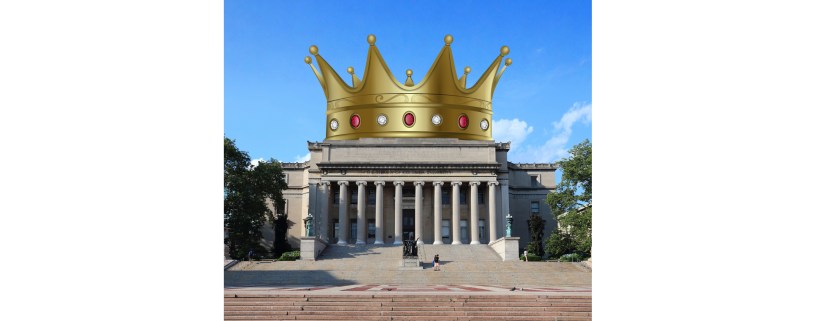
Universities are supposed to be marketplaces of ideas, but today too many behave more like ideological monarchies. Conservative voices are sidelined, controversial speakers are blocked, and funding can hinge on ideological loyalty. What was meant to be a place for debate has become a setting where conformity is rewarded and dissent is policed.
If robust debate itself is treated as dangerous, can universities still claim to be the guardians of truth? This commentary explores the tension between progressive ideals and institutional reality, and suggests ways to reclaim openness, integrity, and intellectual pluralism.
The “No Kings” Ideal and Its Modern Contradiction
The slogan “No Kings” has become a rallying cry for decentralization, individual freedom, and opposition to concentrated power. Yet in higher education, particularly progressive stronghold states like California, Massachusetts, and New York, the very institutions that champion these ideals often act like ideological monarchies, controlling discourse, rewarding orthodoxy, and silencing dissent. From skewed faculty hiring and disrupted speaker events to compliance with authoritarian directives from state leaders, the contradiction between rhetoric and practice is impossible to ignore. How long can institutions preach liberation while practicing control?
California offers a vivid case study. Governor Gavin Newsom warned that any university signing President Trump’s “Compact for Academic Excellence in Higher Education,” which aimed to promote ideological diversity by increasing conservative teaching, would lose state funding. The implicit message is clear: defying ideological conformity carries material consequences. So much for decentralization. With little apparent self-awareness or sense of irony, lessons learned from the campus struggles of the 60’s counterculture have come full circle, but with the roles reversed. When funding becomes an ideological weapon, the “No Kings” ethos begins to crumble.
Faculty Skew: Data That Speaks Volumes
Recent surveys reveal striking political imbalances among faculty at leading universities.
- Duke University (2024): Only 3.87% of faculty identified as “very conservative,” while over 61% identified as liberal or very liberal.
- Harvard University (2022): More than 80% of faculty identified as liberal or very liberal; only 1% identified as conservative.
- Yale University (2017): Roughly 75% of faculty identified as liberal, compared, compared with 7–9% conservative.
These imbalances are not just statistical quirks; they shape curricula, hiring, mentorship, and the very culture and boundaries of acceptable debate. After all, if nearly everyone in the room thinks alike, who’s left to question the premise?
When Free Speech Isn’t Free
When conservative voices emerge, they frequently face disruption. A prominent example is Riley Gaines, former NCAA swimmer, who has repeatedly faced hostility and threats for speaking on women’s sports and fairness in athletics.
These incidents are not isolated. Across the country, speakers and scholars who express right-of-center views increasingly encounter disruption, intimidation, or institutional resistance:
- Olivia Krolczyk, a conservative speaker and former University of Cincinnati student, was disciplined by being given a failing grade for using the term “biological woman.” She was scheduled to speak at the University of Washington in 2025, but protesters pulled fire alarms, smashed windows, and forced her to leave under police escort. According to her Title IX complaint, the university failed to provide a safe environment, effectively silencing her.
- Robert George, McCormick Professor of Jurisprudence and Director of the James Madison Program at Princeton University, was shouted down by students during an invited speech at Washington College in 2023.
- Judge Kyle Duncan of the U.S. Court of Appeals for the Fifth Circuit was invited to speak at Stanford Law School in 2023. He faced ridicule and heckling that prevented him from finishing his remarks. Not only did administrators allow the disruption to continue, but Associate Dean, Tirien Steinbach joined in the confrontation herself.
- Stephen Davis, a conservative speaker known as “MAGA Hulk,” was invited to speak at UC Davis in 2022. Before the event could begin, violent clashes between protestors and counter-protestors forced its cancellation.
- Milo Yiannopoulis, a conservative commentator, and Ann Coulter, a conservative author and podcaster, had planned speeches canceled at UC Berkeley in 2017 after “protestors set fires, smashed windows and hurled explosives ahead of the planned speeches.”
- Charles Murray, political scientist and co-author of The Bell Curve, was invited to speak at Middlebury College in 2017. He was shouted down by student protestors, and both he and Middlebury professor Allison Stanger were physically attacked while leaving the venue. Stanger was hospitalized and diagnosed with a concussion.
This pattern isn’t confined to conservative speakers. At the University of Southern California, a faculty member was reassigned to remote teaching after expressing anti-Hamas views, illustrating how professors too can face institutional consequences for viewpoints deemed controversial. The Foundation for Individual Rights and Expression (FIRE) criticized USC’s response, noting “that the ‘heated exchange of ideas’ once common on university campuses appears to be an alien experience for many at USC.”
Disturbingly, hostility is not limited to speakers and faculty. Conservative students attending such events have also faced harassment, including being struck with objects, threatened, told to kill themselves, or even having “human feces” thrown at them.
These incidents demonstrate a worsening pattern: campus activism escalating from peaceful protest to physical intimidation, harassment, and even violence. Such an environment chills free speech and undermines the universities’ mission as forums for open debate. Regardless of one’s personal stance on a given viewpoint, when institutions fail to protect speakers, faculty, and students who challenge prevailing norms, they compromise the core principle of free inquiry that is essential to higher education.
Selective Science and Ideological Consistency
Universities and progressive advocates often insist on “trusting the science,” but only when it supports their politics. They invoke “scientific consensus” for vaccines and climate policies, yet reject evidence when it challenges preferred narratives. This contradiction is especially clear in sports. Former NCAA swimmer Riley Gaines and other female athletes have been dismissed or attacked for noting the measurable physical advantages of biological males. These advantages are not theoretical. They have real consequences. Female volleyball players, basketball players, rugby players, and boxers have suffered serious injuries when competing against transgender athletes. One report notes a male volleyball player who injured a female opponent so severely she suffered a concussion and permanent damage.
The disregard for biology extends beyond athletics. A University of Pittsburgh professor claimed that it is impossible to differentiate between male and female skeletons, a statement that defies both forensic and anthropological science. Similarly, at St. Philip’s College in Texas, biology professor Johnson Varkey was dismissed for teaching that biological sex is determined by X and Y chromosomes, a fundamental scientific fact. His case highlights how institutional “trust in science” often depends on political alignment rather than evidence, and his eventual reinstatement shows how even settled science can become controversial.
Such claims reveal the intellectual cost of politicizing truth: when ideology trumps evidence, reason itself becomes partisan. They also beg the question: is this really the direction higher education is headed? And if so, is it worth the price?
When Free Speech Turns Deadly
The stakes of silencing free expression, in particular dissent, are no longer abstract. In September 2025, conservative activist Charlie Kirk was assassinated while speaking at Utah Valley University, and a year prior, then former President Donald Trump survived two attempted assassinations. These tragedies illustrate that ideological conflict in America has escalated from debates and protests to acts of lethal violence. They underscore an unsettling reality: when discourse is suppressed and dissent is treated as dangerous, words can quickly give way to real-world harm.
This climate of fear is already evident in the daily experiences of students and faculty. A 2024 FIRE College Free Speech survey of over 55,000 students from 254 colleges aimed at measuring campus openness to free expression, found at least a quarter of students self-censor “fairly often” or “very often” during peer discussions (25%), interactions with professors (27%), and in class (28%). A similar share reported they self-censor more now than when they began college.
Topics considered sensitive and difficult to discuss include abortion (49%), gun control (43%), racial inequality (42%), and transgender rights (42%). Unsurprisingly, students were far more opposed to conservative speakers (57% to 72%) than liberal speakers (29% to 43%). Alarmingly however, 45% of students approved of blocking peers from attending a speech, with 27% indicating that violence could be acceptable to stop a speaker.
Even more concerning, incidents of antisemitism often go underreported and inadequately addressed, as discussed in my previous piece on higher education and antisemitism. This highlights the broader consequences when universities selectively enforce safety and speech protections.
These numbers are more than statistics; they are an early warning. Self-censorship and hostility toward dissent create a culture in which debate is stifled and disagreements are perceived as existential threats. The Gaines and Krolczyk cases illustrate the consequences, while national incidents like Kirk’s assassination highlight the extreme endpoint of silenced or demonized voices. Take note university administrators: if the next generation sees suppression as a virtue, what becomes of inquiry itself?
California: A Case Study in Modern Monarchy
While these issues are nationwide, California provides a particularly vivid illustration of how progressive institutions can centralize control over thought and expression. Policies and enforcement decisions reveal that managing ideas often takes precedence over protecting inquiry.
Conservative students at California colleges and universities continue to experience harassment and disruptions when attempting to organize or host events on campus. At UC Davis in April 2025, masked protestors attacked members of a Turning Point USA student group. At UC Berkeley, conservative and Republican students frequently face harassment when attempting to host conservative speakers (February through October 2024). It’s no wonder Berkeley remains under federal scrutiny as investigators continue to probe allegations that administrators failed to protect Jewish and Israeli students during campus protests, highlighting selective enforcement depending on the cause.
These examples illustrate the paradox at the heart of modern academia: universities that market openness and pluralism often enforce conformity when ideas collide with prevailing institutional norms. Police action, rewritten protest rules, and reassignment of professors all serve to maintain ideological control. The faces of power may change, but the monarchical reflex remains. Perhaps the question is no longer whether control exists, but rather whether anyone cares to call it out.
When Governor Gavin Newsom announced in October 2025 that California would withdraw funding from any university signing President Trump’s “Compact for Academic Excellence in Higher Education,” the symbolism was complete: the state’s highest office using public funds to enforce ideological loyalty. From Sacramento to the quad, authority flows one way, downward, and dissent is treated as disorder.
This Pattern is Not Confined to California
A recent investigation by the House Education & Workforce Committee found that leading universities, including Harvard, Columbia, Rutgers, Northwestern and UCLA, allowed student protests, encampments, and antisemitic disruptions to proceed with minimal discipline, through negotiated concessions or via institutional inaction. For example, Harvard referred 68 participants for discipline yet suspended none; Columbia permitted a building takeover despite major disruptions; Rutgers allowed exam-disrupting encampments to proceed unchecked; Northwestern’s administration engaged ideologically with protest leaders; and UCLA reportedly failed to protect Jewish students’ access to campus.
These patterns echo what we see at UC Berkeley, UC Davis, Stanford, and elsewhere across the country. Conservative students and speakers face harassment, attacks and inconsistent protection from administrators. Power over campus discourse is centralized, enforcement is inconsistent, and free expression for minority viewpoints is compromised. If the rules shift with ideology, is justice ever truly neutral?
Financial Incentives and Ideological Control
The pressures that constrain campus discourse are not always purely ideological; they are often financial. As I explored in Higher Education and Antisemitism: Follow the Money foreign donations and other financial entanglements can subtly, or overtly, shape university policies, including which voices are amplified and which are silenced. When funding comes with strings attached, institutional decision-making risks prioritizing donor preferences over open inquiry. In such an environment, ideological enforcement is not just tolerated, it is incentivized. It begs the question, when “truth” becomes tied to a checkbook, how free can academic thought truly be?
Consequences of Control
When ideology and power align, suppression follows. It is not just anecdotal. FIRE’s 2022 Academic Mind survey shows a widening ideological divide in attitudes toward expression and control on campus. Conservative faculty are not only more likely to self-censor (73% versus 45%) but also to fear professional or reputational backlash (72% versus 40%), while liberal faculty, especially younger ones, show greater acceptance of “soft authoritarian” measures such as investigations, social pressure, and restrictions framed as protecting against “hate speech.” Younger and female professors, particularly young liberals, are also more tolerant of disruptive tactics like shouting down speakers or blocking entry, whereas older and conservative faculty overwhelmingly reject such behavior and violence as illegitimate means of silencing dissent.
New data from FIRE’s 2024 College Faculty Survey deepen this pattern. The report found that 87% of faculty reported difficulty discussing at least one hot-button topic, and 14% said they had been disciplined or threatened for teaching, research, or speaking. Difficult to discuss hot button topics include: racial inequality (51%), transgender rights (49%), and affirmative action (47%). Increasingly troubling, 35% admitted self-censoring “written work to avoid controversy.” But most damning, only 20% of faculty said a conservative colleague would be a “positive fit” in their department, compared to 71% for a liberal colleague. It is no surprise, therefore, that over half of conservative respondents reported hiding their political beliefs to avoid professional or social repercussions. The result is an academic culture where ideological alignment shapes not only what can be said, but also who is perceived as belonging. And when belonging requires belief, is scholarship regulating its own form of faith? If so, it is a quiet but powerful mechanism of control.
The authors of FIRE’S 2022 report warn that this pattern echoes an earlier, darker chapter in American academia. At the end of the McCarthy era, only 9% of social scientists admitted toning down their work for fear of controversy. Today, the numbers are several times higher. More than 50% of conservative faculty and 31% of liberal faculty report they self-censor now more often than they did just two years prior (2020), and specific political views, primarily conservative ones, are increasingly targeted for sanction. Compared to the McCarthy era, today’s academic environment is both more ideologically uniform and more dependent on non-tenured faculty. This leaves those outside the mainstream especially vulnerable to professional reprisal. The report concludes with a stark choice: faculty can remain silent and hope the “fever passes,” or they can actively defend free inquiry and reject both the soft and hard authoritarian pressures shaping campus culture across the country.
For students, the stakes are just as real: a California college was ordered to pay $330,000 for censoring conservative students, demonstrating the tangible cost of suppressing speech.
Why does this matter? When universities centralize ideological power, they erode trust, suppress dialogue, and compromise academic credibility. Students begin to self-censor, faculty sidestep controversial research, and the public increasingly views universities not as laboratories of inquiry but as echo chambers of orthodoxy.
“No Kings” Contradiction
The contradiction is stark: the “No Kings” ethos celebrates decentralization, open debate, and resistance to concentrated power. Yet, many institutions of higher education that claim to uphold these ideals now resemble monarchies of thought, deciding which ideas may be spoken and which must be silenced. They champion “diversity and inclusion” in word, but true intellectual diversity too often remains the exception.
When dissent invites punishment, when funding hinges on compliance, and when free inquiry requires ideological approval, those are not the hallmarks of democracy. They are the trappings of a modern monarchy.
Reestablishing the university as a space for open and safe discourse requires acknowledging these consequences. When students fear speaking, when faculty avoid controversial research, and when violence or the threat of institutional retaliation looms, the promise of free expression is hollow.
Reclaiming Integrity: How to Align Values and Practice
Restoring alignment between values and practice does not require abandoning any particular ideology. It requires structural reforms that preserve institutional integrity and protect pluralism:
- Guarantee speaker access regardless of viewpoint. Universities should adopt clear, written procedures ensuring that invited speakers can present their views safely and without interference. Gaines’ case and others illustrate the real-world consequences when such protections are absent. They should never be allowed to be repeated.
- Ensure transparency in hiring and promotion. Faculty recruitment should consider intellectual and ideological diversity, not just conformity to prevailing norms. Data from Duke, Harvard, and Yale show that the overwhelming liberal skew is neither incidental nor unavoidable. It reflects institutional choices.
- Universities often emphasize diversity, equity, and inclusion in student admissions, arguing that varied backgrounds enrich the learning environment. The same principle should apply to faculty. A university cannot claim to value diversity while excluding those with differing political or philosophical perspectives. Genuine diversity includes viewpoint diversity.
- Institutions should actively seek scholars across the spectrum to foster true debate and innovation. Hiring should never be a loyalty test.
- Decouple funding from ideology. State threats to withhold funding based on faculty beliefs or program content undermine academic freedom and open debate, no matter which party does it! States and universities alike must separate financial incentives from ideological compliance.
- Audit campus climates for free expression. Institutions can measure and track the health of debate on campus, ensuring that students and faculty feel safe expressing diverse perspectives. FIRE’s College Free Speech Rankings 2024 offer a useful model.
The tools for reform exist. The question is whether universities have the will to use them.
No Kings — Only Open Arenas of Ideas
The goal is not to “side with conservatives” or “attack progressives.” It is to reclaim universities as arenas for robust debate, critical thinking, and pluralistic inquiry, not thrones from which orthodoxy is enforced. It’s about defending institutional integrity.
Universities should not act as kings in an ideological monarchy; they should be marketplaces of ideas where no single perspective reigns supreme. Otherwise, they betray their supposed core mission: to seek truth through open debate.
In an era of deep polarization, when public trust in institutions is fragile, restoring credibility matters. Aligning policies with professed values, embracing viewpoint diversity, protecting speech, decentralizing control over ideas, and rewarding courage over conformity, is essential if higher education is to remain a space for genuine learning, exploration, and civic engagement.
If universities truly believe in the principal of no kings and no ideological favorites, as they so earnestly profess, they must begin with an honest look in the mirror. Freedom thrives not when power is concentrated in the hands of the ideologically dominant, but when every voice, regardless of its popularity, can be heard, considered, and debated on its merits.
If academia wants to lead, it must first learn to listen.
If you like what you’re reading, or simply appreciate an alternate point of view, please consider subscribing. Thank you!
 Inside Out Odyssey